

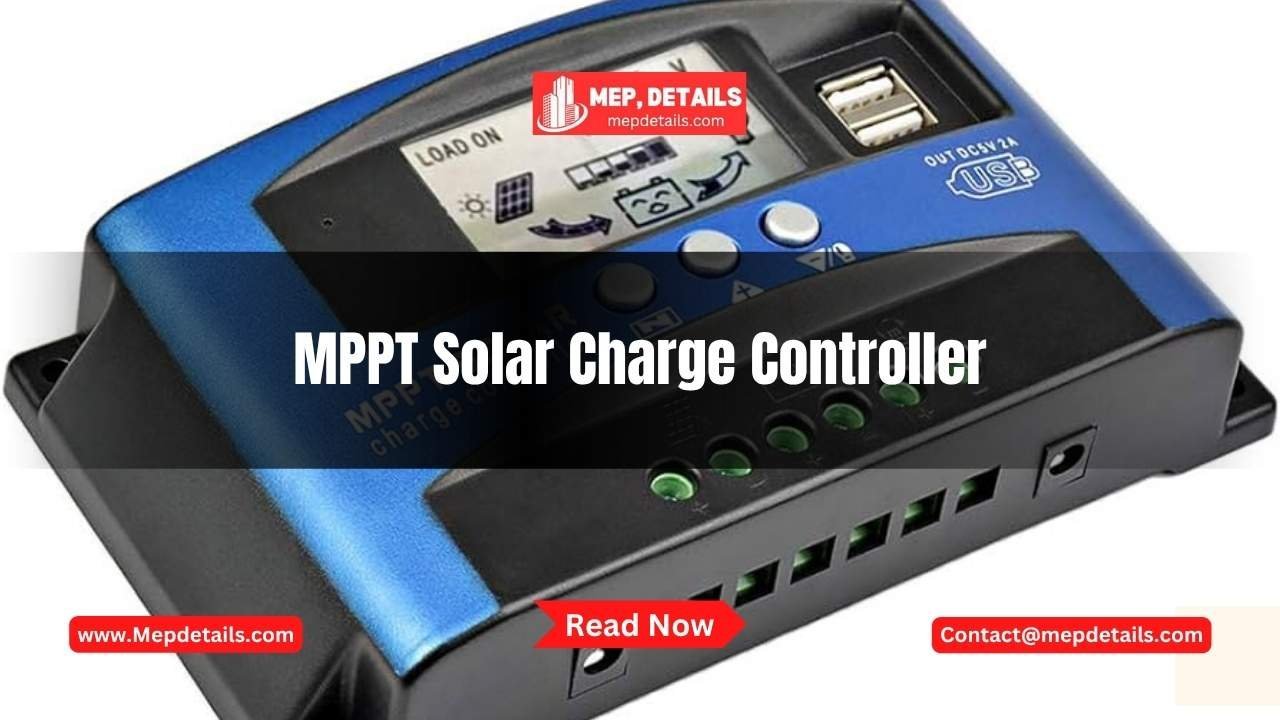
What Is an MPPT Solar Charge Controller?
An MPPT solar charge controller joins your solar panels with your battery system. It tells the system how many of the solar panels’ electrons go into the battery. Especially, it makes your panels produce more effective output by adjusting voltage and current. For example, your solar panel makes 18 volts and 6 amps, even though your battery can only be charged with 12 volts. Normal controllers tend to lower the voltage which results in some wasted energy. The extra voltage an MPPT controller gets from overproducing is converted into more amps, so the entire harvest is made good use of.How Does an MPPT Solar Charge Controller Work?
MPPT controllers are always looking at how much power is produced by the solar panel. Afterwards, technicians look for which point offers maximum production from the solar panel. They manage the input voltage and current so they reach this setting. Once that is done, the controller lowers the high voltage to fit what the battery needs. Also, it increases the amount of current flowing. So, the battery can get extra power without being overcharged. This is how you can see it in a simple way:- A solar panel will generate: 18V × 6A = 108W
- Base model needs: 12V for the battery
- With MPPT, you get around 2% less output than simple math would predict (rounded to 108W).
Why Choose an MPPT Solar Charge Controller?
Many benefits attract people to choose MPPT controllers:1. Higher Efficiency
An MPPT controller is up to 30% more efficient than using the standard PWM (Pulse Width Modulation) controller. These better results can be achieved on cold or cloudy days, since voltage changes more frequently then.2. Faster Charging
Since MPPT controllers give more power to the batteries, charging the batteries takes less time. You notice this feature being handy when you need power from your solar system daily, like in RVs, boats or homes that are not connected to the power grid.3. Better Battery Life
MPPT controllers stop the battery from getting overcharged or discharged past its maximum point. The battery is maintained in good condition which means it can work for longer.4. Flexible Solar Panel Options
Making use of MPPT, you can use panels made for high voltage, unlike with PWM-based controllers. It lets you change your design as necessary while creating your solar power system.MPPT vs. PWM Solar Charge Controllers
Let’s compare the two:
| Feature | MPPT | PWM |
|---|---|---|
| Efficiency | High (up to 98%) | Lower (70-80%) |
| Cost | More expensive | Cheaper |
| Performance in cold weather | Excellent | Poor |
| Ideal for | Large systems or variable weather | Small, stable systems |
| Power tracking | Yes | No |
So, even though the MPPT solar charge controller costs more, it saves you money over time by using more of your solar power.
Subscribe to Read Full Engineering Publication
This verified technical document contains complete mathematical derivations, IS/NBC 2016 code references, equipment sizing schedules, and AutoCAD DWG blueprints.
Have Specific Equipment or Plant Capacities to Calculate?
Our AI Specialist can troubleshoot technical issues, calculate duct velocity, determine chiller load, or size cables specifically for "MPPT Solar Charge Controller: Boost Solar Efficiency".

popeye21834
Licensed Engineering ContributorChartered Senior MEP Engineer & Review Board Specialist with extensive design, testing, and commissioning field experience across commercial and industrial infrastructure.

Leave a Reply