
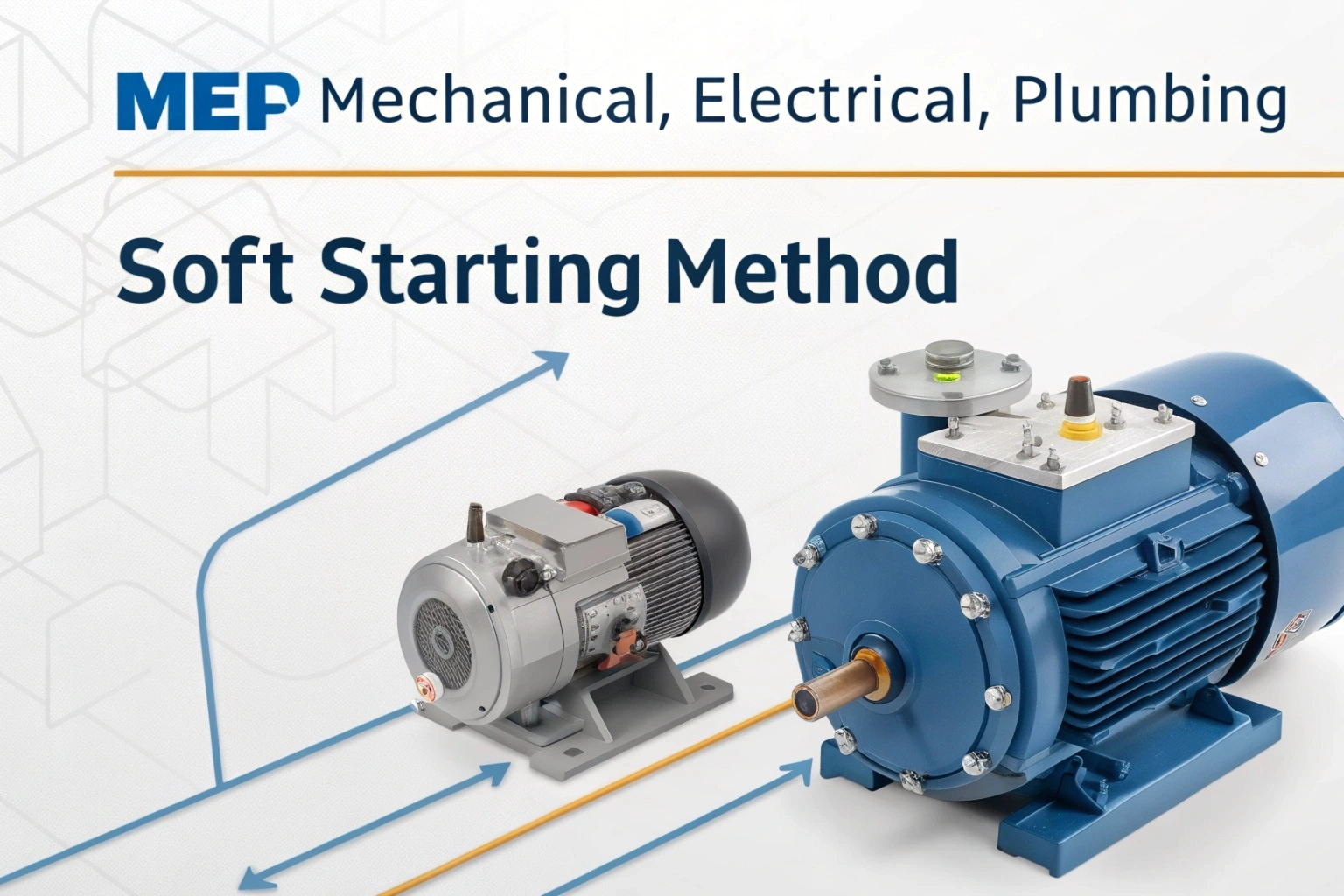
When the electric motor starts directly, it takes up a very high current. This inrush current will probably damage equipment, trip breakers, and reduce motor life. To avoid this problem, engineers use something called soft starting.
The soft start limits the current and torque of the motor at the time of starting. Instead of giving full voltage in an instant, it increases the voltage gradually. Because of this, the motor starts smoothly and safely.
Why Soft Starting Is Required
Electric motors, most especially induction motors, consume 5 to 7 times their rated current at the time of direct starting. Consequently, this situation provides electrical stress and mechanical shock. Prolonged exposure can damage windings, shafts, couplings, and driven loads.
Starting current is controlled by using soft starting. Hence, the voltage drop issues reduce, mechanical life improves, and maintenance cost goes down. Because of this reason, soft starting finds its extensive application in pumps, compressors, conveyors, and HVAC.
How Soft Starting Works
Voltage is applied gradually to the motor during soft starting. This gives the motor the ability to build speed slowly. Since it accelerates, current reduces automatically till it reaches the normal running condition.
In different soft-starting methods, voltage or current is controlled by using different techniques. Each has its own merits and demerits depending upon the load type and motor rating.
Methods of Soft Starting
Primary Resistance Starter
Resistors are connected in series with the motor during starting. These reduce the voltage at the motor terminals, but as the motor picks up speed, these resistors are gradually cut out.
This method, though simple, is very inefficient as the power in the resistors is dissipated as heat. For this very reason, it is seldom used in recent installations.
Star-Delta Starter
One of the most common soft starting methods is star-delta. A motor starts in star connection, voltage is reduced to 58% of the rated value. When the motor picks up to a certain speed, it shifts to delta connection.
Although this method reduces starting current, it is not suitable for high-load starting. Sudden switching from star to delta can also cause mechanical stress.
Auto Transformer Starter
This method employs an autotransformer to step down the voltage during start-up. Various voltage tapings are possible. When the motor reaches a speed close to the rated value, full voltage is applied.
Auto transformer starters give better torque control compared to star-delta starters. However, they are more expensive and require more space.
Electronic Soft Starter
Electronic soft starters use semiconductor devices like thyristors to control voltage smoothly. Voltage ramp-up is fully controlled electronically.
Today, this is the most applied method for soft starting. It features smooth acceleration, allows for variable control of torque, reduces mechanical stresses, and offers better protection features.
Variable Frequency Drive (VFD)
VFDs control both voltage and frequency during motor startup. This provides excellent control over motor speed and torque.
Although VFDs are mainly used for speed control, they also act as the best soft starting solution. However, they are costlier compared to standard soft starters.
Advantages of Soft Starting
Soft starting reduces electrical and mechanical stress. It increases motor lifespan and decreases maintenance requirements. Additionally, it improves system reliability and protects connected equipment.
Power system stability also improves because starting current peaks are minimized.
Applications of Soft Starting
Soft starting is commonly used in pumps, fans, compressors, crushers, conveyors, elevators, and HVAC systems. Any application involving heavy starting load benefits from soft starting methods.
Conclusion
Soft starting plays a very important role in modern electrical systems. It ensures smooth motor acceleration, protects equipment, and improves energy efficiency. Choosing the right soft starting method depends on motor size, load type, and project budget.
Understanding soft starting techniques is essential for every electrical engineer working in industrial or building services projects.
READ ALSO: Revit MEP or Autocad MEP
Have Specific Equipment or Plant Capacities to Calculate?
Our AI Specialist can troubleshoot technical issues, calculate duct velocity, determine chiller load, or size cables specifically for "What Is Soft Starting? Simple Explanation for Electrical Engineers".
popeye21834
Licensed Engineering ContributorChartered Senior MEP Engineer & Review Board Specialist with extensive design, testing, and commissioning field experience across commercial and industrial infrastructure.

Leave a Reply