

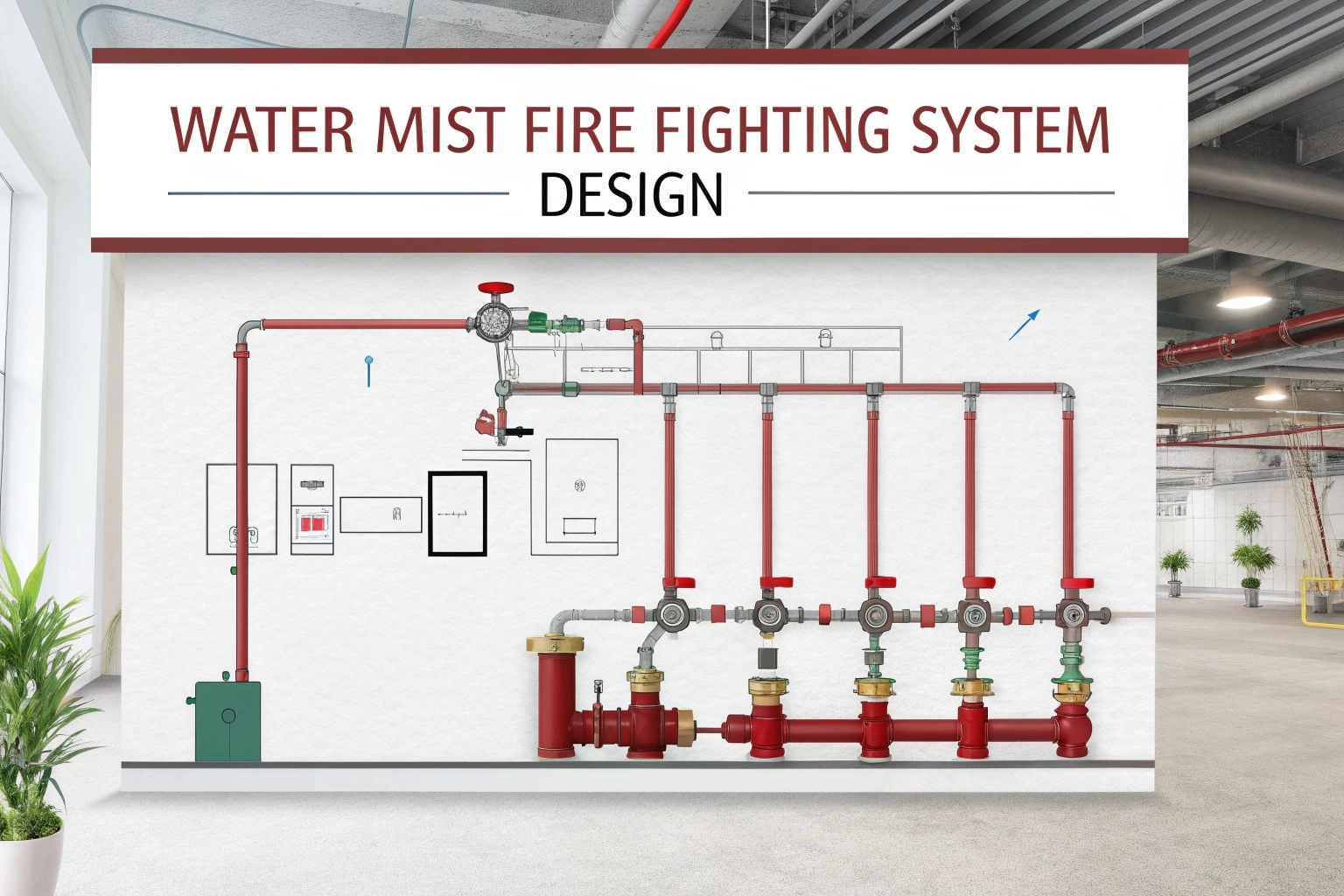
Water mist fire fighting system is technique which is used to stop fire by using small water drops to cool hot gases and supress flames they use very little water its good for places where they keep sensitive equipement like computer servers, engine rooms and old book libraries they help to stop fire fast and do not make much damage to things and also absorb heat very well.
How Water Mist Extinguishes Fires
- Cooling Effect: Small water drops they vaporise very fast they takes away a lot of heat and makes flame temperature very low so its below the combustion thingy.
- Oxygen Displacement: As water turns to steam, it expands ~1,700 × by volume, diluting oxygen at the fire front and slowing combustion.
- Radiation Attenuation: Mist is technique which is used to by mist to stop fire from spreding. it forms radient heat barrier around the surfaces and prevents fire to go to other places. they uses mist to save things from burning, this is very useful and peoples uses it a lot.
Key Design Steps
- Hazard Classification: – Identify fire risks (Class A, B, C, or special hazards). – Select appropriate system type (high‐pressure, low‐pressure, or hybrid mist).
- Nozzle Selection & Placement: – Choose validated mist nozzles with certified discharge characteristics. – Position nozzles to ensure full coverage: typically 1–2 m spacing in protected volume. – Maintain minimum distances from obstructions to avoid shadowing.
- Piping Network & Pressure Requirements: – Design loop or branch lines with surge‐compatible materials (stainless steel or copper). – Ensure supply pressure matches nozzle operating range (e.g., 70–175 bar for high‐pressure mist). – Calculate pressure loss: include fittings, valves, and elevation changes to guarantee minimum nozzle pressure.
- Water Supply & Pumping: – Size pumps based on total mist flow rate and system pressure demand. – Provide redundancy for critical applications (n+1 configuration). – Incorporate self‐contained or centralized water reservoirs with pressure stabilization.
- Control & Actuation: – Integrate fire detection (heat, smoke, or flame detectors) for automatic system actuation. – Include manual release stations and local alarms. – Coordinate with building management and fire‐alarm panels for supervision.
- System Commissioning & Maintenance: – Perform hydraulic acceptance tests to verify design flow and pressure. – Conduct nozzle flow‐pattern and fog‐distribution checks. – Establish periodic inspection schedules—nozzle cleaning, pump‐room tests, and control checks—to maintain reliability.
Applications & Advantages
- Delicate Equipment Protection: Minimal water fallout is technique which prevent electrical and mechanical damage to things, they prevents water to enter in electrical things using multiple techniques one of the most common technique is using water resistant material, waterproof coating and sealing. they use their technique to prevent damage to electrical things like computer, mobile etc. this is very useful all over the world and still its very important.
- Historic & Architectural Sites: Low‐impact fire suppression preserves interiors and artifacts.
- Confined Spaces: Compact piping and reduced water volume suit ship engine rooms and tunnels.
- Life Safety: Rapid heat suppression enhances occupant egress and emergency response.
Article Topic Tags:
Found this technical guide useful? Share with fellow engineers:
Engineering AI Co-Pilot
Have Specific Equipment or Plant Capacities to Calculate?
Our AI Specialist can troubleshoot technical issues, calculate duct velocity, determine chiller load, or size cables specifically for "Water Mist Fire-Fighting System Design – Fundamentals".

popeye21834
Licensed Engineering ContributorChartered Senior MEP Engineer & Review Board Specialist with extensive design, testing, and commissioning field experience across commercial and industrial infrastructure.
Previous Article
Novec 1230 Fire Suppression Calculation Sheets (Excel)
Next Article
Free AutoCAD Blocks for Data, Telephone, and TV Outlets

Leave a Reply