
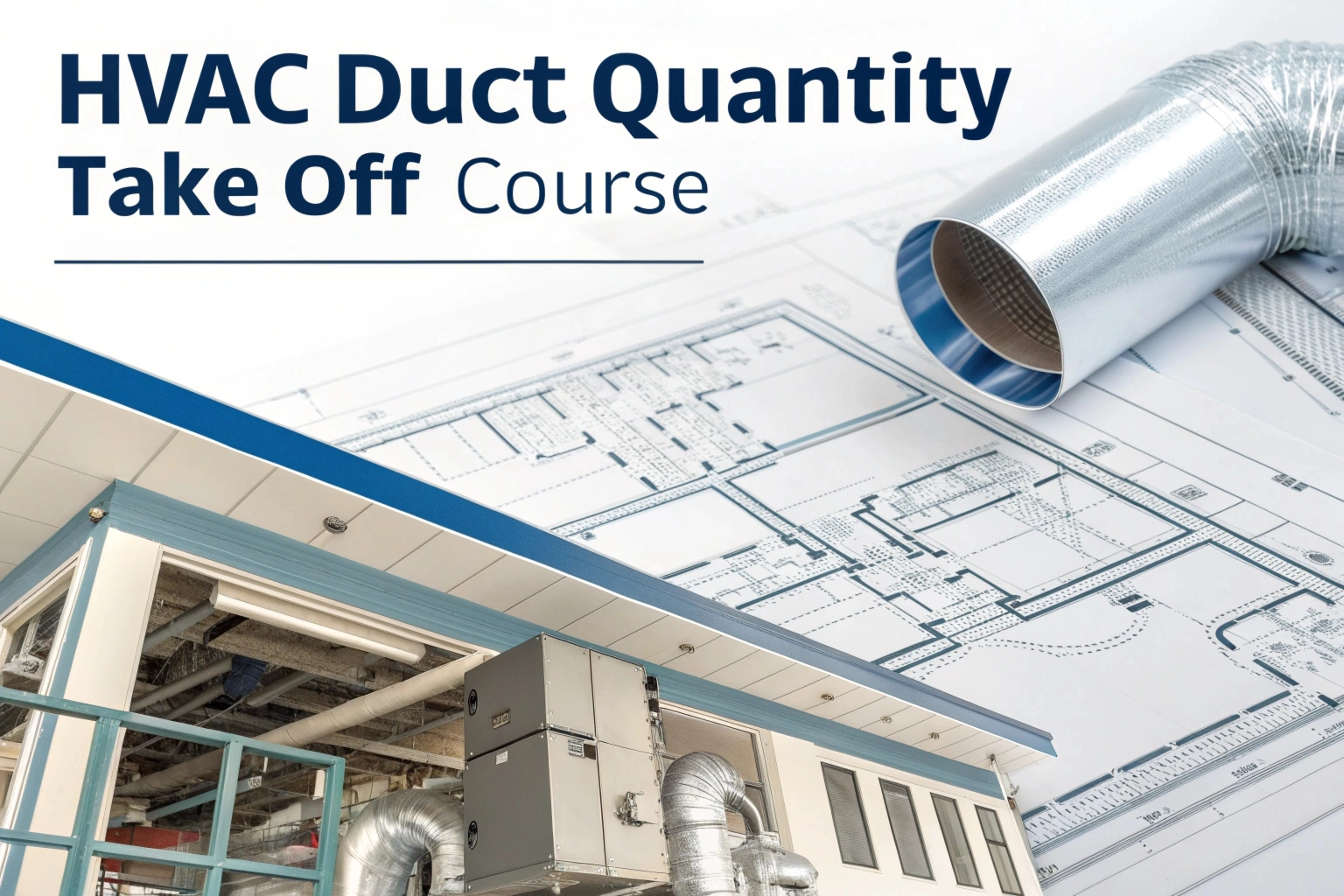
If you’re looking to get into the MEP field, and you keep hearing about “duct quantity take-off,” well, it’s not as scary as it sounds. Honestly, when I first looked at duct drawings, everything seemed to be some kind of maze with rectangles and lines. Once you understand the basics, though, the whole process becomes so simple and actually fun. That’s exactly why courses are getting popular on HVAC Duct Quantity Take Off, especially for starters who want a good start in quantity surveying.
Throughout the article, I am going to describe what this course is all about, what one learns, and why every MEP QS should master it. I will keep it as simple and easy as one your age would explain to a friend.
What This Course Is All About
This HVAC Duct Quantity Take Off course will teach you how to work out the total quantity of ductwork required in a project, including lengths of ducts, fittings, transitions, elbows, and reducers, plus the sheet metal area. The objective is to help in the preparation of accurate BOQ, cost estimate, and material sheets.
This skill is super important because, for the MEP quantity surveyors, wrong quantities mean wrong budgets-and that leads to trouble on site.
The course normally covers:
Reading HVAC drawings
Understanding duct types, shapes, and standards
Duct length and area calculations
Counting fittings correctly
Using SMACNA or project specifications
Preparation of BOQ formats in Excel
Cross-checking with consultants’ drawings
You don’t have to be a math genius. Just attention to detail and a bit of patience.
Why MEP Quantity Surveyors Need This Skill
Accuracy matters a lot in the field of MEP. Even a small error in duct area calculation can increase sheet metal cost. The contractors will hate that, your clients will hate that, and your project manager will definitely hate that.
That’s why learning the correct method gives you a big advantage. You become a person who can confidently take the measurements, convert them into sheet metal area, and prepare a clean BOQ.
And honestly, once you know the formulas and the flow, it’s just routine.
What You’ll Learn Step by Step
1. Understanding Duct Drawings
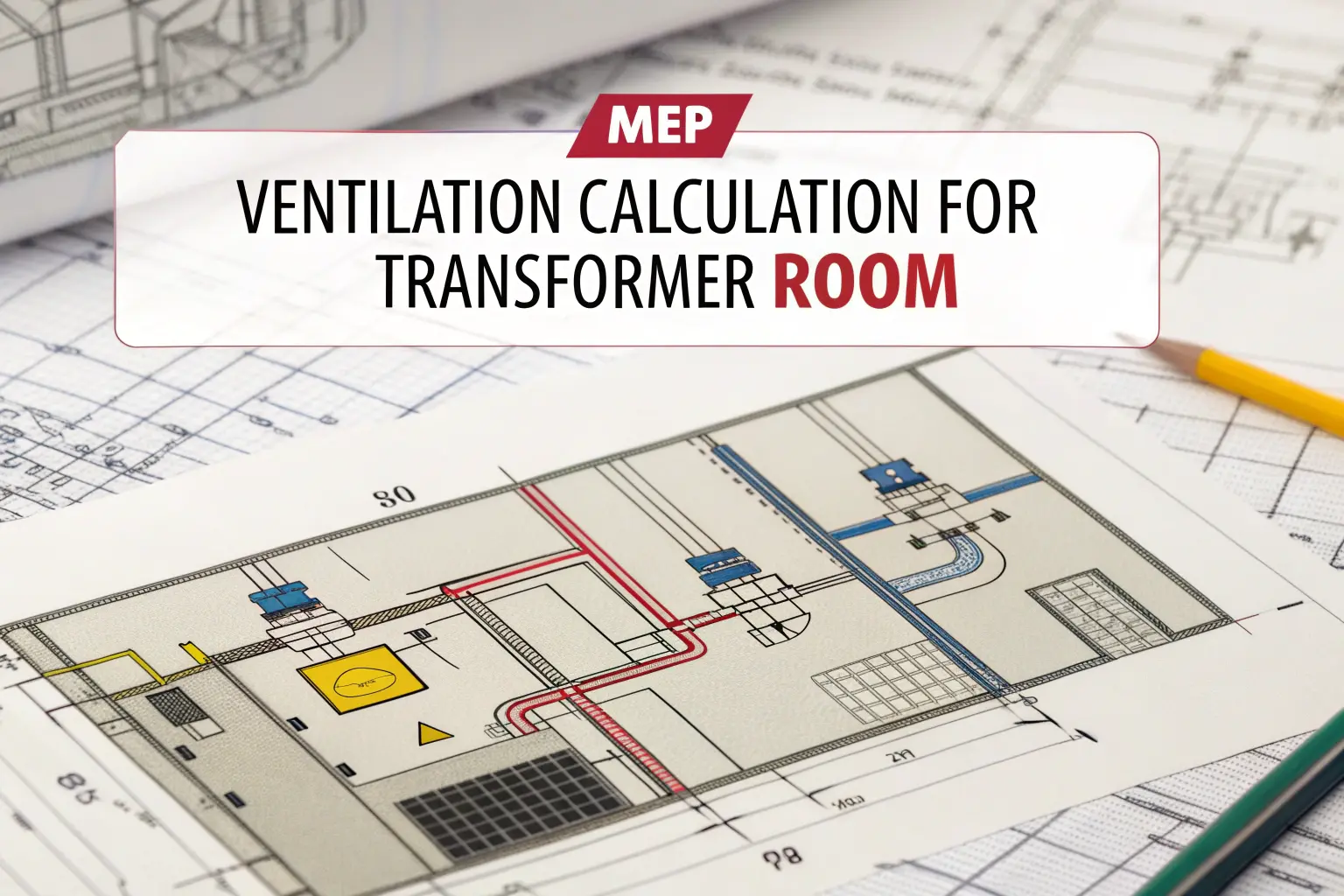
You start by learning the difference between supply, return, exhaust, and fresh air ducts. Then you learn how to read symbols, tags, duct sizes, and routes. This is the most important step.
2. Duct Measurements
The course teaches how to calculate straight duct lengths using scale drawings or CAD drawings. You also learn how to differentiate between round, rectangular, and oval ducts.
3. Duct Fittings
That’s where beginners get confused. Fittings such as elbows, transitions, offsets, and tap-offs are counted differently. The course explains how to convert each fitting into sheet-metal area.
4. Sheet Metal Area Calculations
You learn the formulas for converting duct dimensions into sheet-metal square meters. This is very important for pricing and material ordering.
5. BOQ Preparation
Finally, the course helps you in developing a correct Bill of Quantities with the proper item descriptions, units, and quantities.
By the end, you should be able to confidently prepare a complete duct take-off sheet.
How This Course Helps You in the Real World
Once you complete this course, you’ll be able to:
Prepare accurate BOQs
Assist quantity survey teams
Support estimation departments
Understand changes related to the site
Better coordination with engineers
Avoid costly mistakes
Most companies prefer those who can handle take-offs, so this skill increases your chances of landing a job.
The HVAC Duct Quantity Take Off Course is one of the best starting points for any person getting into MEP QS. It’s full of practical, job-oriented information and instills much-needed confidence to work with real drawings. If you plan on building your career in quantity surveying, duct take-off is almost a must-know.
And the best part? Once you learn it properly, it becomes one of the easiest tasks in your daily workload.