

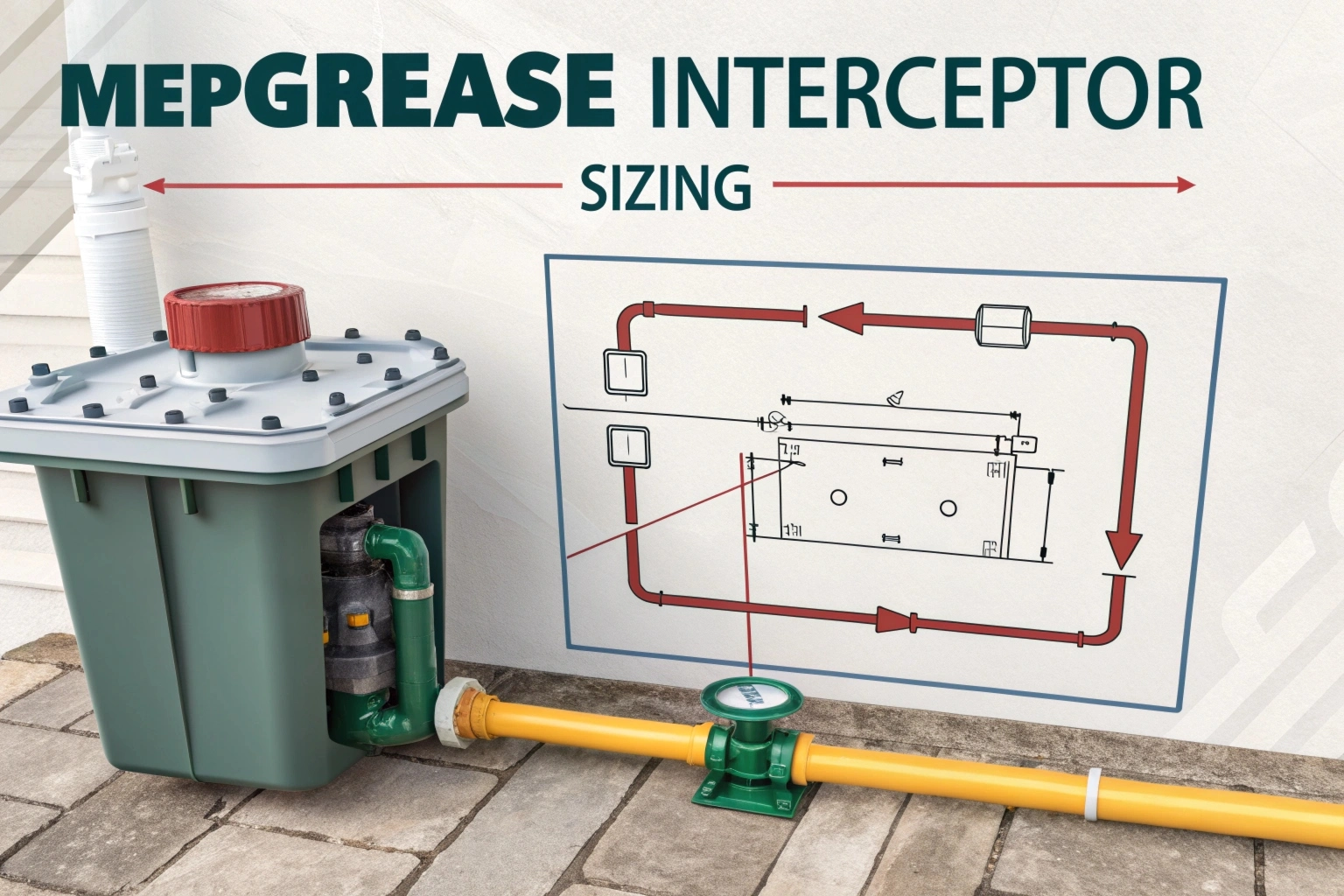
Sizing a grease interceptor-or grease trap-is something every plumbing or MEP engineer is sooner or later faced with. Grease interceptors must be installed on restaurants, cafeterias, commercial kitchens, and food-processing areas that drain fats, oils, and grease into a drainage system. An interceptor that is too small overflows, while an interceptor that is too large becomes very expensive to purchase and clean.
Because of that, understanding grease trap sizing is extremely important.
What a Grease Interceptor Really Does
A grease interceptor is pretty much a separation tank. Also, wastewater entering the tank will have grease floating to the top and solid particles settling at the bottom while relatively clearer water flows out in the middle layer.
This protects the drainage pipes from blockages resulting from the settling of oil and grease. It will also help buildings in complying with plumbing and environmental regulations. In commercial kitchens, grease traps are mandatory.
Where Grease Traps Are Used
Grease interceptors are most commonly installed in the following:
Commercial kitchens
Hotels and restaurants
Cafeterias and food courts
Bakeries
Large hospitals and dining facilities Whenever food is prepared or cleaned, grease is present. Therefore, a trap should be installed before wastewater reaches the main drainage line.
How to Size a Grease Interceptor
There are various sizing methods used throughout the industry. The most common of these is based on the sink volume and flow rate. This method is accepted by many regions’ plumbing codes since it keeps sizing simple and practical.
Step 1: Measure Sink Dimensions
You need:
Length (L)
Width (W)
Depth (D)
Multiply these to get sink volume:
Sink Volume (in cubic inches) = L × W × D
Step 2: Convert Volume to Gallons
Because most sizing charts use gallons, convert cubic inches to gallons:
Gallons = Sink Volume ÷ 231
(231 cubic inches = 1 gallon)
Step 3: Consider Load Factors
Kitchens don’t always operate at the same load, so a safety factor is in use. Usually:
Light duty → 25%
Normal use → 50%
Heavy use → 75–100%
Most engineers use 50% as a standard design practice.
Step 4: Select Grease Interceptor Size
Once the volume and load are know, choose the next available size from the manufacturer’s catalog. Grease interceptors are usually available in:
20 GPM
25 GPM
35 GPM
50 GPM
75 GPM
100+ GPM
Real-world kitchens usually fall between 25–50 GPM depending on sink quantity and workload.
Example Calculation
Let’s say a kitchen sink measures:
L = 30 in
W = 24 in
D = 14 in
Sink Volume = 30 × 24 × 14 = 10,080 cubic inches
Convert to gallons:
10,080 ÷ 231 ≈ 43.6 gallons
Apply 50% load factor:
43.6 × 0.5 ≈ 21.8 GPM
Choose the next available interceptor size:
25 GPM Grease Interceptor
This will safely handle the kitchen demand.
Common Mistakes to Avoid
1. Undersizing the interceptor : This leads to constant overflow and bad odors.
2. Installation of traps too far from the sinks Long pipe runs allow the grease to cool and harden before it reaches the trap.
3. Not following cleaning schedules Even a trap which is properly size will malfunction if it is not cleaned on a consistent basis. .
4. Neglecting future expansion If the kitchen grows, so too should the grease trap handle extra load.
Maintenance Tips
Clean small grease traps on a weekly basis.
Clean larger in-ground interceptors on a monthly basis, or more frequently as determined by local regulations.
Keep the maintenance record to avoid penalties.
Proper cleaning guarantees a long service life and avoids clogging issues.
Conclusion
Grease interceptor sizing is not that hard once you understand the basic steps. You can size most grease traps properly by measuring sink volume, converting to gallons, applying load factors, and selecting the nearest GPM rating. This ensures that kitchen operations run easier, drainage is cleaner, and that plumbing codes are met.

Have Specific Equipment or Plant Capacities to Calculate?
Our AI Specialist can troubleshoot technical issues, calculate duct velocity, determine chiller load, or size cables specifically for "How to Size a Grease Interceptor – Simple Guide for MEP Engineers".

popeye21834
Licensed Engineering ContributorChartered Senior MEP Engineer & Review Board Specialist with extensive design, testing, and commissioning field experience across commercial and industrial infrastructure.

Leave a Reply