

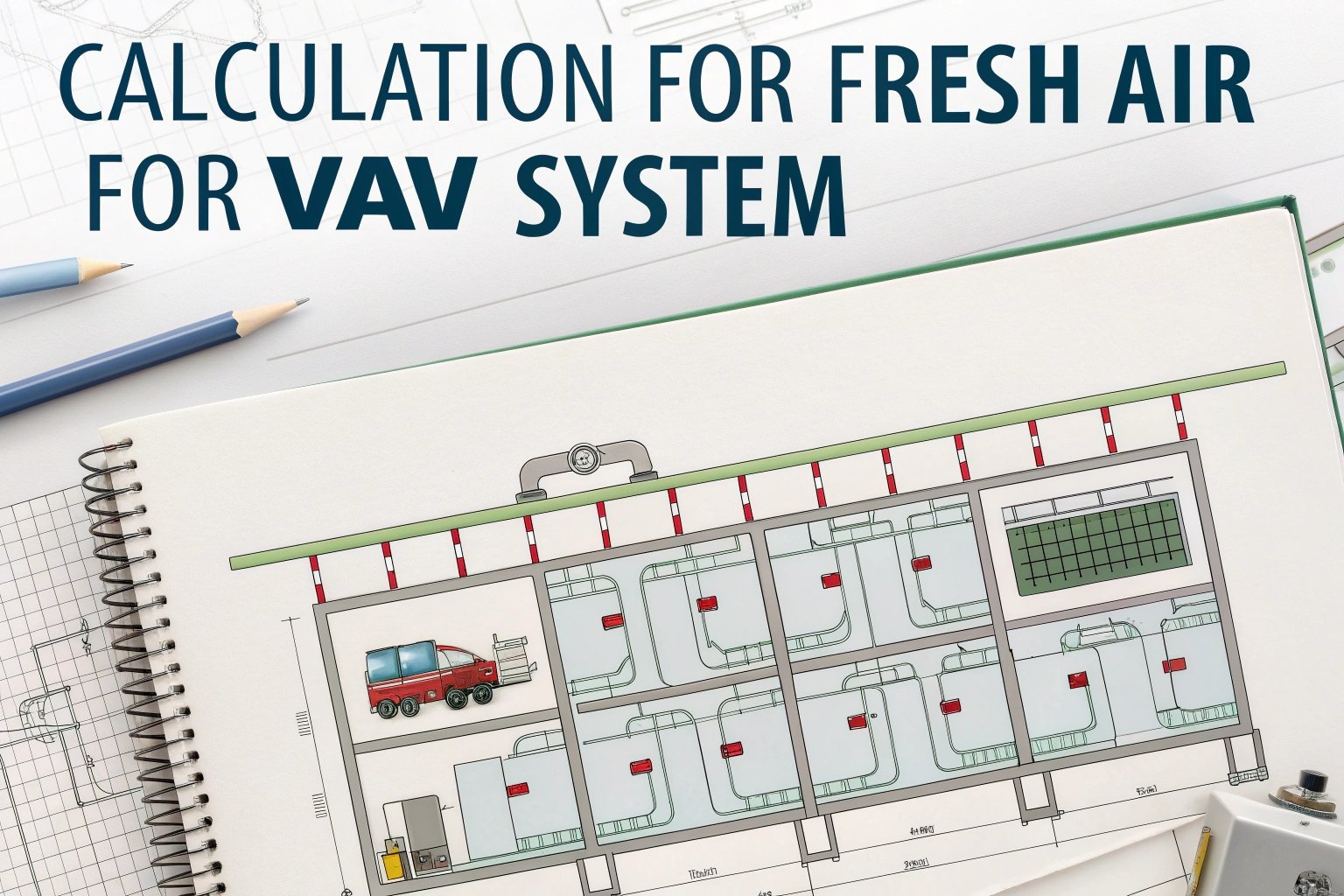
When you enter a mall, office, or classroom, the air is usually clean and comfortable. That’s not magic, but rather the HVAC system doing its job. An important part of it is fresh air in all those premises, particularly those using the VAV system, which is the Variable Air Volume system.
Now, calculating fresh air for a VAV system may sound super complicated, but really, it’s a lot simpler once you break it down. So, let’s do this step by step.
What Is a VAV System?
With a VAV system, the quantity of air supplied to each room is varied.
Instead of always blowing the same amount of air everywhere, it varies the airflow according to the room’s needs. This helps to conserve energy and keep people more comfortable.
But even as the volume of air varies, we still need a minimum quantity of fresh air to keep the indoor environment healthy. That’s where fresh air calculation comes in.
Why Fresh Air Is Important
That is, fresh air can dilute indoor pollutants, including odors, CO₂, dust, and humidity.
If you do not bring enough outdoor air into a building, people feel sleepy, uncomfortable, and sometimes even sick.
So yeah — fresh air matters more than we think.
The Basic Formula for Fresh Air Calculation
To keep things simple, here’s the easiest way to think about fresh air calculation:
Fresh Air Required = Number of People × Fresh Air per Person
Okay, but what’s “fresh air per person”?
ASHRAE (the international HVAC standard) usually gives this number.
For most offices, it’s around 5–10 liters per second (L/s) per person, or 10–20 CFM per person.
So if a room has:
- 20 people
- Needs 10 CFM per person
Then the fresh air needed is:
20 × 10 = 200 CFM
That’s it. Super basic.
Adding the VAV System Twist
Here’s where things get slightly tricky — VAV systems reduce airflow when the room doesn’t need cooling.
But even then, the room still needs fresh air.
So we need to make sure minimum air supply is always higher than the fresh air requirement.
Example
Let’s say:
- Minimum airflow of the VAV box = 300 CFM
- Outdoor air percentage = 30%
Fresh air supplied = 300 × 0.30 = 90 CFM
If your required fresh air is 100 CFM, then you need to increase either:
- The minimum airflow, or
- The outdoor air percentage
That’s exactly how engineers balance the system.
Don’t Forget Ventilation Efficiency
Sometimes rooms don’t get equal air flow. ASHRAE uses something called ventilation effectiveness, usually around 0.8–1.0.
Fresh air needed = Fresh air required / Ventilation effectiveness
So if you need 200 CFM, and ventilation efficiency is 0.9:
200 / 0.9 ≈ 222 CFM
Now your target is 222 CFM of outdoor air.
Download Files
You can download files easily from the given link…..

Have Specific Equipment or Plant Capacities to Calculate?
Our AI Specialist can troubleshoot technical issues, calculate duct velocity, determine chiller load, or size cables specifically for "Calculation for Fresh Air for VAV System".

popeye21834
Licensed Engineering ContributorChartered Senior MEP Engineer & Review Board Specialist with extensive design, testing, and commissioning field experience across commercial and industrial infrastructure.

Leave a Reply