
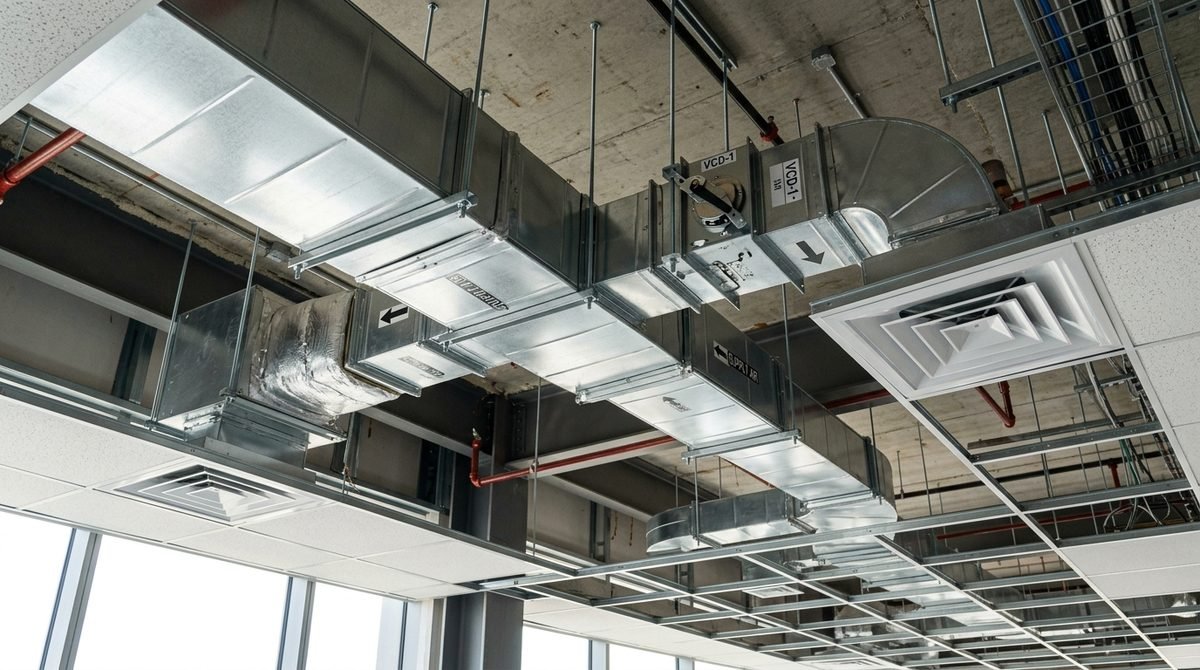
What is Constant Air Volume-CAV?
Constant Air Volume (CAV) is a type of HVAC system. In a simple CAV system, the airflow is constant, but the temperature of the air changes to match the heating or cooling needs of a room.
CAV System Basics
CAV (Constant Air Volume) systems have some limitations. They provide air at a constant volume, but the temperature can vary. Typically, the system delivers air at around 13°C (55°F), but this can be adjusted. The amount of air supplied depends on the size of the area being conditioned and the activities in the room. For example, a small room might need 3 cubic meters per second of air, while larger rooms might need 20 or 30 cubic meters per second. A large building could need even more. For a 40-story building with one huge AHU on the roof, the required air volume could be very high.Issues with CAV Systems
One problem with CAV systems is that all rooms connected to the AHU receive the same temperature air, regardless of their individual heat load. For example, a busy summer meeting room will get the same air temperature as an empty adjacent room. This inefficiency wastes cooling energy. Fans in CAV systems run at full speed all the time. Variable Speed Drives (VSD) can reduce motor speed to improve efficiency. Converting a CAV system to a Variable Air Volume (VAV) system is challenging and requires significant modifications. However, it can result in energy savings, even though CAV systems are cheaper to install and easier to operate.CAV System Configuration

Dual Duct CAV System
Dual duct CAV systems are less common today but can still be found in older buildings. This system uses two ducts: one for cold air and one for warm air. Dampers in each room mix the air to achieve the desired temperature. The return air goes back to the AHU for recycling or expulsion.
Difference Between Constant Air Volume and Variable Air Volume
Constant Air Volume Systems
CAV systems maintain a constant airflow and adjust the air supply temperature to meet indoor conditions. For example, on a hot summer day, a CAV system provides colder air to cool the building. In chilled water systems, the cooling effect comes from the cold water flow to the fan coil unit, which the water flow controller adjusts based on thermostat settings. CAV systems work well in single-zone areas with stable loads, like auditoriums, theaters, and museums. They are less efficient in multi-zone applications because they require duct heaters to provide different temperatures for each zone. For example, consider a multi-zone CAV system with:- An air-handling unit (AHU) serving three zones (A, B, and C)
- Each zone having its own thermostat
- The AHU receiving cold water from a chiller with a cooling tower
- Duct heaters on the main branches for each zone
Variable Air Volume Systems
VAV systems maintain a constant air temperature and adjust airflow based on the load. VAV systems can be single-zone, multi-zone, or dual duct configurations. They are best suited for multi-zone systems. Dual duct VAV systems use separate ducts for hot and cold air. Each zone has a plenum where the airflow is mixed to achieve the desired temperature. This system is the most expensive to install, operate, and maintain. In multi-zone VAV systems, VAV boxes control the airflow to each zone, while the cold water flow to the fan coil unit remains constant. VAV systems are most effective in buildings with variable loads across multiple zones, such as malls, hotels, and office buildings. Instead of reheating air as in CAV systems, VAV boxes adjust the airflow to maintain a constant temperature for each zone.Conclusion
CAV systems are not suitable for every building. But, they can be very cost-effective and efficient in places like concert halls, gymnasiums, and warehouses. Use CAV systems in situations where you don’t need to change the air pressure or speed often. They work best in stable environments with less climate variation.FAQs
How does a CAV system work?
A CAV unit runs the fan and compressor at full power until the temperature reaches a set level. Then, the compressor turns off. This on/off cycle isn’t very good at keeping the temperature steady. CAV systems are small and control only one area.How does a CAV system operate?
Fresh outdoor air enters the AHU, gets filtered, heated or cooled, and then a fan blows it through the ducts to different parts of the building. There are several branches coming off the main supply duct.What is the difference between VAV and CAV?
Ventilation systems can be constant air volume (CAV) or variable air volume (VAV). CAV systems provide a constant airflow but with changing temperatures. VAV systems offer variable airflow but keep the temperature steady.What is a constant volume AHU?
A constant volume AHU provides a fixed airflow rate at a constant temperature (usually 55°F) for each zone. This airflow rate is based on the cooling needs of that zone. Read More – Types of Cooling Towers: A Comprehensive GuideHave Specific Equipment or Plant Capacities to Calculate?
Our AI Specialist can troubleshoot technical issues, calculate duct velocity, determine chiller load, or size cables specifically for "Constant Air Volume-CAV: Ideal Applications and Use Cases".
popeye21834
Licensed Engineering ContributorChartered Senior MEP Engineer & Review Board Specialist with extensive design, testing, and commissioning field experience across commercial and industrial infrastructure.

Leave a Reply