
PRO Upgrade to MEP Details Pro — Unlock Advanced AI, MEP Calculations, Tools & SOPs View Plans →
ELECTRICAL>Electrical Basic 4 min read PE Verified

Heat Storage Design: A Simple Guide for Beginners

popeye21834
popeye21834
Published January 1, 1970
Heat Storage Design: A Simple Guide for Beginners
Ref: Plant Equipment Specification • ISHRAE / ASHRAE Standards MEP Technical Asset

Heat storage designs are becoming important these days, as buildings and factories, and systems generating renewable energy, try to save energy for reducing operating costs. The concept is straightforward. Rather than using energy at the instant it is produced, we store a part of the energy in heat form and use it later. In this way, systems function more effectively, wasting less energy.

But one would have to plan a system of heat storage. You would need to know how much heat you need, for how long, and with what material. Once these points are known, heat storage becomes a very effective tool for keeping the temperature up and energy bills down.

What Is Heat Storage Design?

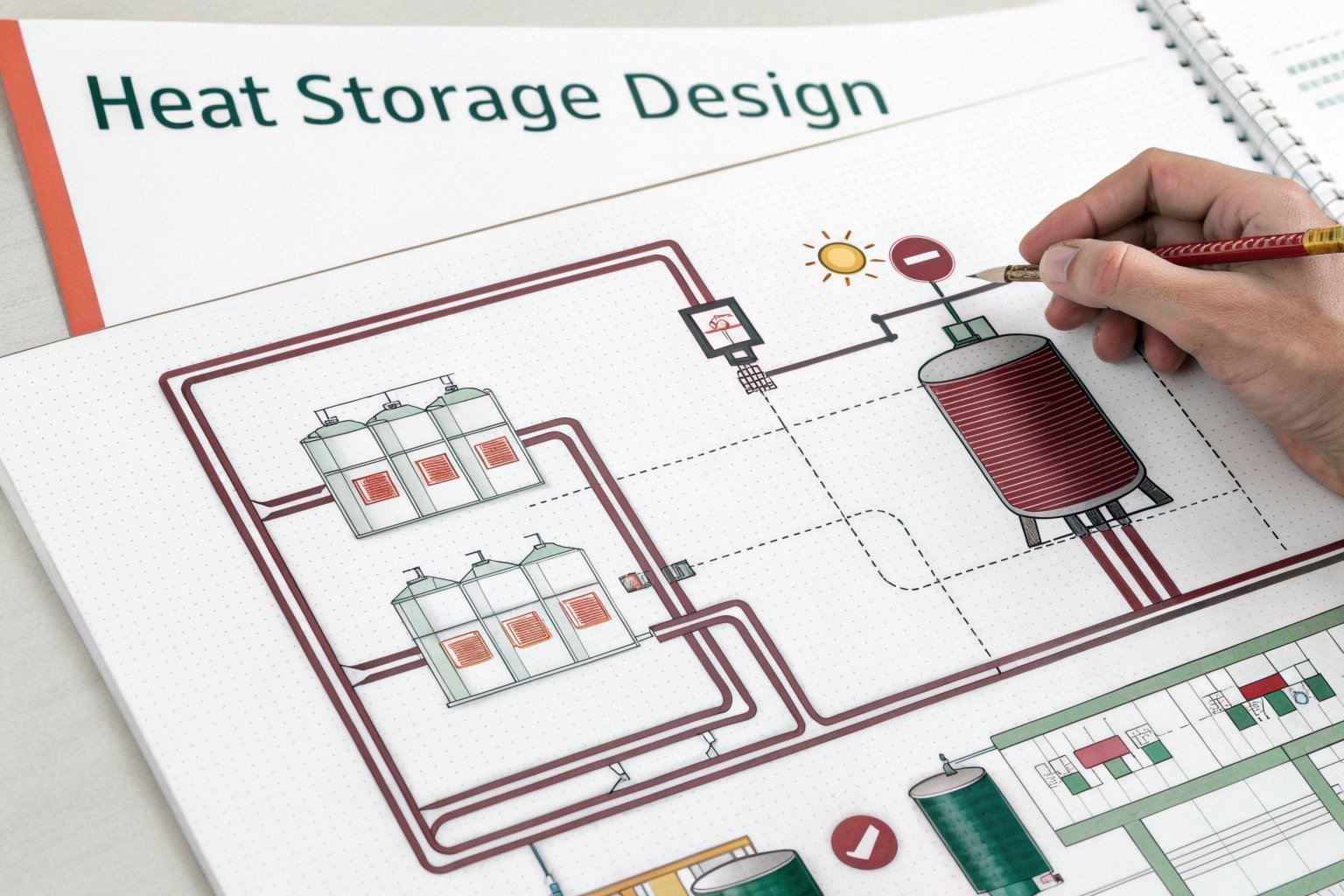
Heat storage design is a process in which thermal energy is gathered, stored internally in a medium, and released when needed. Stored heat can originate from boilers, solar panels, machine waste heat, or even natural sunlight.

There are several types of storage methods, including water tanks, phase-change materials, and underground thermal systems. Since each works a little differently, the design will depend on how much heat you want to store and how quickly you want to release it.

Why Heat Storage Matters

Heat storage helps reduce energy use during peak hours. As an illustration, instead of running boilers and heat pumps in full swing in the evenings, stored heat can be used. Consequently, energy usage becomes smoother while equipment lasts longer.

Besides, heat storage supports renewable systems. Solar heating will be producing more heat during the day, while demand often rises at night. With storage, you can shift this extra daytime heat to nighttime use. Therefore, your system becomes far more stable and efficient.

Main Types of Heat Storage

1. Sensible Heat Storage

The most straightforward approach is sensible heat storage. It works by raising the temperature of some medium-usually water, rocks, or concrete. Because water has a high heat capacity, it is in common use for both buildings and industry.

2. Latent Heat Storage

Latent heat storage utilizes phase-change materials. These materials, during melting or solidification, absorb and release heat, respectively. Because they store more energy in smaller sizes, they are useful for compact buildings or energy-efficient systems.

3. Thermochemical Heat Storage

It is a method that stores heat through chemical reactions. Although it is more complex, it stores energy for a much longer time without major heat loss. Therefore, it is ideal for large-scale systems.

Important Steps in Heat Storage Design

1. Identify Heat Demand

It all starts with the understanding of how much heat is required and when. This helps in deciding the storage capacity and the type of material.

2. Select Storage Medium

Water tanks are widely used because of their simplicity and low cost. However, PCMs and chemical storage are employed when space is at a premium or when longer-term storage is needed.

3. Choose Charging Method

The heat source can be a boiler, solar collector, heat pump, or machinery. If the system is properly designed, the storage tank will heat up when needed.

4. Plan for Heat Discharge

Once the heat is stored, it has to be smoothly released. This may involve pumps, valves, or heat exchangers. Thus, the discharge rate must match the demand of the building.

5. Insulation and Safety

Proper insulation prevents loss of heat. Besides, the system is safeguarded against overheating and expansion by safety valves, temperature sensors, and pressure controls.

Common Applications of Heat Storage

Heat storage systems are used in many areas:

  • Residential heating and hot water systems
  • Solar thermal plants
  • District heating networks
  • Industrial waste heat recovery
  • HVAC systems for large buildings
  • Greenhouses and drying systems

Because these applications require stable heating, heat storage becomes a reliable solution.

Benefits of Heat Storage Design

It offers various advantages: reduction in energy cost due to a drop in peak-hour usage, increase in system efficiency and a reduction in equipment cycling, renewable energy, and a lower carbon footprint. Energy savings, on many occasions, pay back the cost of installation.

Challenges in Heat Storage Design

Though it is useful, heat storage also faces challenges. Large tanks may be difficult to install because of space limitations. Selection of the right material also requires proper temperature and cost analysis. These problems are easily manageable if designed carefully.

Heat storage design plays an important role in modern HVAC and energy systems. By storing heat when energy is cheap or abundant for later use, systems turn out to be more efficient and reliable. Whether it’s designing a small home system or a large industrial project, knowledge of the basics in heat storage helps anyone involved make wiser engineering decisions.

Found this technical guide useful? Share with fellow engineers:
Engineering AI Co-Pilot

Have Specific Equipment or Plant Capacities to Calculate?

Our AI Specialist can troubleshoot technical issues, calculate duct velocity, determine chiller load, or size cables specifically for "Heat Storage Design: A Simple Guide for Beginners".

popeye21834

popeye21834

Licensed Engineering Contributor
View all posts

Chartered Senior MEP Engineer & Review Board Specialist with extensive design, testing, and commissioning field experience across commercial and industrial infrastructure.

Leave a Reply

Your email address will not be published. Required fields are marked *

Blog