
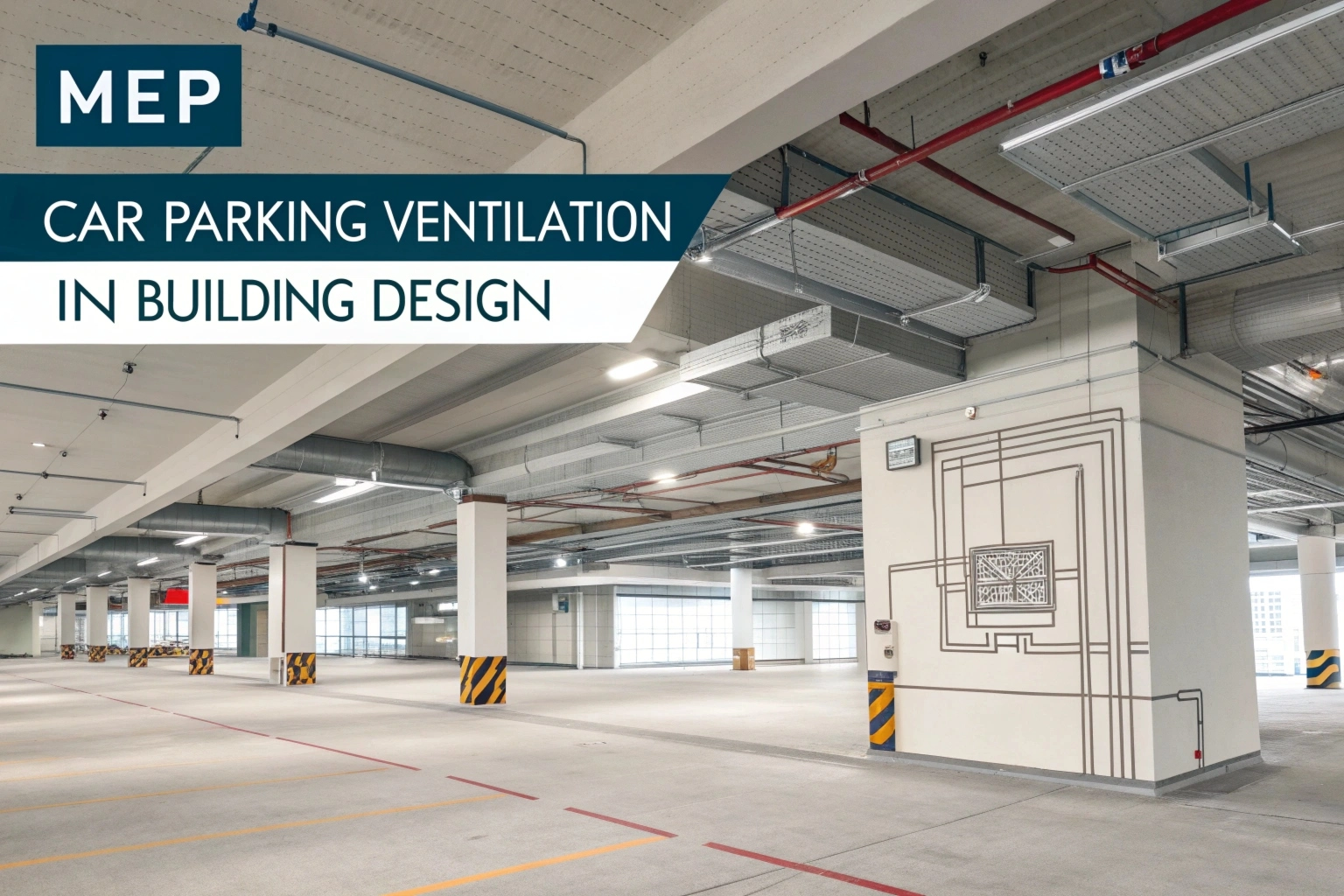
In the realm of building services, car parking ventilation is one of those things many people never notice but which is so very important. A parking area may appear silent and harmless, but the air inside it is far from that. The gases emitted by cars can, in a very short period of time, make that space unsafe to be in unless proper ventilation is provided. This is why engineers always consider parking ventilation an indispensable part of the building design.
Good ventilation is more than just air movement; it is about keeping people safe, protecting property, and making the parking area usable even in cases of emergencies.
Why Do We Need Ventilation in Car Parking Areas?
The parking lots, especially those in the basement or wholly enclosed, lack natural air circulation. While cars get in and out, they emit exhaust gases. Of those, carbon monoxide (CO) stands out as more hazardous. It is colorless, odorless, and can cause serious health issues even in low concentrations.
Without proper ventilation:
CO levels increase rapidly.
Headaches, dizziness, or nausea are felt by people indoors.
Prolonged exposure becomes life-threatening.
Besides health reasons, ventilation also reduces heat buildup and keeps the parking area comfortable for users and workers alike.
Key Goals of Parking Ventilation
A well-planned ventilation system in a car parking area aims to:
1. Remove Harmful Exhaust Gases
The main purpose is to dilute and expel CO and other pollutants from the space. The system maintains safe concentration levels that comply with international standards.
2. Provide Fresh Air Continuously
Fresh air is supplied to replace contaminated air, making the environment breathable and reducing the chances of suffocation.
3. Improve Visibility
Exhaust fumes can create a cloudy environment. Good ventilation keeps the air clear, which helps drivers navigate safely.
4. Control Heat and Odor
With vehicles running in enclosed spaces, heat and unpleasant smells can accumulate. Ventilation helps minimize these issues.
Types of Car Parking Ventilation Systems
There are generally two approaches used in building design:
1. Natural Ventilation
Natural ventilation depends on wind and openings in the structure—such as shafts, grills, or louvers—to move the air.
However, it only works when:
The parking area has both an inlet and an outlet opening.
There is enough cross ventilation
This is why it is used mainly in open or semi-open parking structures.
2. Mechanical Ventilation
This ventilation works best and is most reliable in a basement or closed parking area; it involves the use of fans that push fresh air in and pull contaminated air out.
Mechanical systems include:
Supply and exhaust fans
CO sensors
Jet fans (in large basements)
Duct systems
These systems run continuously or automatically start when CO levels rise above a limit.
Role of CO Sensors in Parking Ventilation
Carbon monoxide sensors are fitted in modern buildings to regulate the ventilation system.
Here’s how they help:
They monitor CO levels in real time
When the levels go up, fans switch on automatically.
When air becomes safe again, the fans slow down or turn off.
Not only does it keep people safe, but it also saves energy, as fans are not required to run 24/7.
Emergency Ventilation Needs
Car parks also need special ventilation in cases of fire.
In case of fire:
it is necessary to extract smoke fast.
Clear escape paths must be maintained.
Visibility is important to firefighters.
Proper ventilation helps in smoke movement control and therefore enables people to escape safely.
Standards and Guidelines for Parking Ventilation
Different countries follow different standards, but the key points everywhere are similar:
Maximum Allowable CO Concentration
Minimum air changes per hour (ACH)
Requirements for automatic control using sensors
Fan placement and airflow direction
Emergency smoke control provisions
These are followed by engineers to ensure that the parking area meets safety expectations.
Conclusion
Car parking ventilation is not just a technical requirement; it is essential for reasons pertaining to safety. Without proper airflow, basement parking areas can become hazardous spaces filled with harmful gases. A well-designed ventilation system keeps the air clean, supports emergency situations, reduces odors, and guarantees a safe environment for all users of the parking facility.