






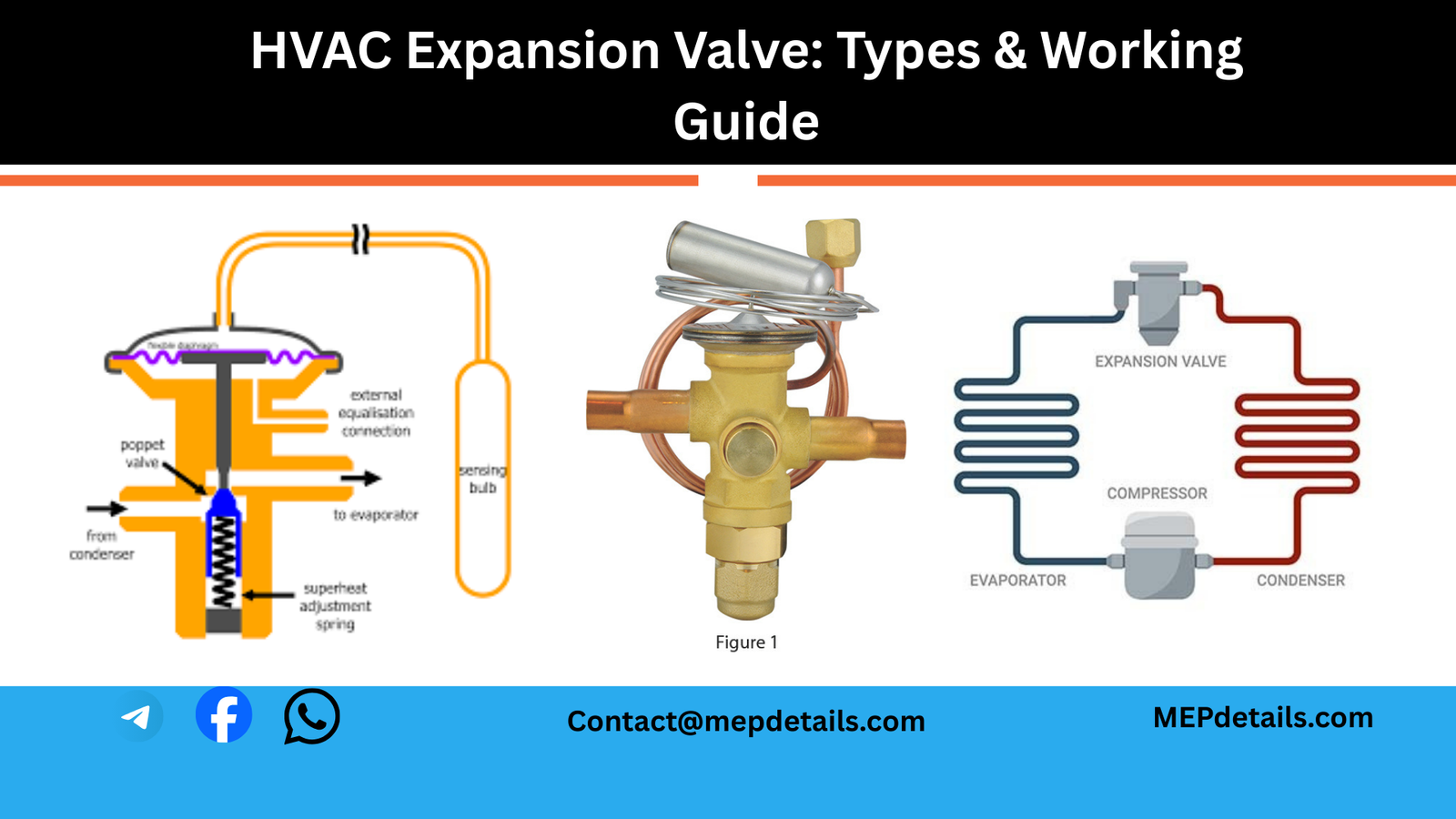
To understand what an Expansion valve is, we need to start the refrigeration cycle and become familiar with its components.
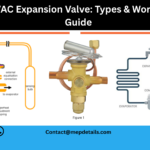
An expansion valve is a metering device that dictates refrigerant flow into an evaporator. It controls cooling capacity, protects the compressor from liquid refrigerant and directly impacts system efficiency and reliability.
In this post, I will take you through the main types of expansion valves, describe how they work, and show hands-on selection, installation and troubleshooting steps that HVAC technicians and system designers perform every day.
Why the Expansion Valve Is Important in HVAC
The expansion valve drops the refrigerant pressure and meters the liquid refrigerant into an evaporator, where it vaporizes as it absorbs heat. Proper metering :
Holds proper evaporator superheat protecting the compressor from liquid slugging.
Adjusts refrigerant flow to the varying load conditions so that the evaporator can perform properly. Affects energy consumption and comfort control and improves capacity control.
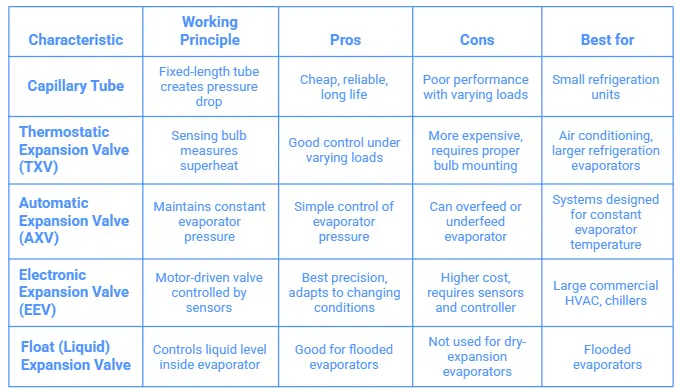
Common Expansion Valve Types and Their Working
How to choose the right expansion valve
- Match to refrigerant and capacity – Confirm that valve material and sizing is compatible with R410A, R134a, R22 etc. Select capacity rating above expected peak load.
- Load Variability: If the load swings widely, use a TXV or EEV. A capillary tube can be considered for fixed-load small systems.
- Depending on control requirement: Use TXV or EEV if stable evaporator super heat must be maintain. Any application which requires precise evaporator pressure or liquid level you should consider AXV or float types.
- Piping and line length: Capillary tubes are very sensitive to piping length and elevation. Motors valves and TXV’s have a little more leeway.
- Service Ability: Electronic valves have diagnostics; mechanical valves are easier to fix but provide less feedback.
Installation and commissioning checklist
- Correct valve orientation: Install per manufacturer instructions to prevent malfunction.
- Bulb mounting for TXV: Secure bulb on suction line at the evaporator outlet, insulated and in good thermal contact; avoid locations with oil accumulation or vibration.
- Use filter drier and strainer: Prevents particles from clogging valve or capillary tube.
- Charge system correctly: For TXV/EEV use superheat method; for capillary use factory charge or subcooling method where appropriate.
- Adjust and verify: Measure suction pressure and temperature at evaporator outlet, calculate superheat, and set TXV or controller target. Typical evaporator superheat targets are 6–12°F (3–7°C) depending on system design.
- Leak test and cleanliness: Evacuate and test for leaks before charging; contamination drastically reduces valve life.
Troubleshooting common expansion valve problems
| Symptom | Possible Causes | Recommended Action |
| Flooding (Liquid leaving evaporator) | Overfeeding, loose/poorly placed sensing bulb, stuck valve. | Check bulb: Ensure tight contact/insulation. Measure for low superheat. |
| Starving (High superheat, poor cooling) | Undersized valve, restricted liquid line (clogged filter), low charge. | Inspect flow: Check filter drier/strainer. Measure subcooling to verify charge. |
| Hunting (Unstable suction pressure) | Wrong valve size for load, incorrect spring setting, faulty EEV controller. | Tune/Adjust: Adjust TXV spring or EEV settings. Ensure valve matches system load. |
Quick diagnostic steps I use =
- Measure suction pressure and temperature at evaporator outlet; calculate superheat.
- Measure liquid line pressure and temperature at condenser outlet; calculate subcooling.
- Compare values to design targets. Low superheat or negative superheat indicates flooding. High superheat indicates starvation.
- Inspect valve and sight glass for liquid flow and bubbles.
Common mistakes and pitfalls to avoid
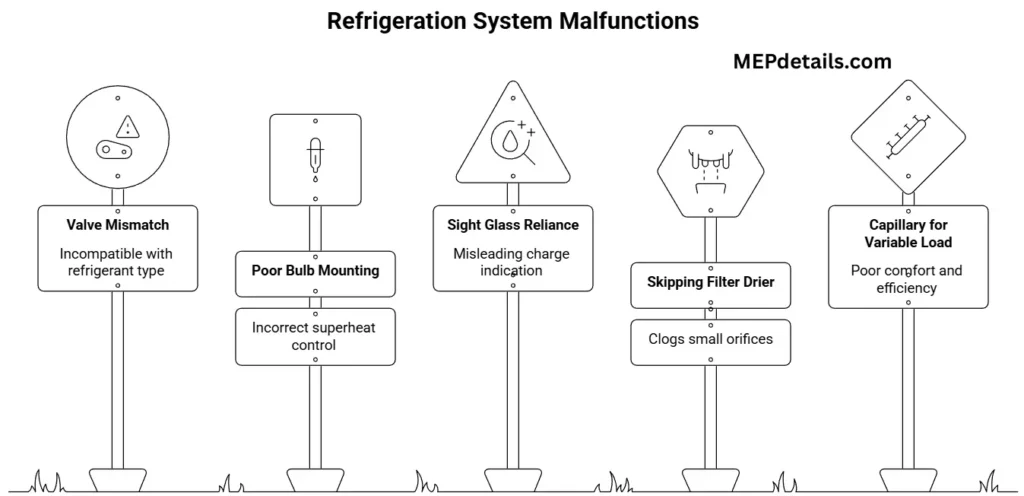
Summary and practical checklist
Choosing and commissioning the right expansion valve matters for reliability, efficiency, and compressor protection. I recommend the following quick checklist for any service or new installation:
- Confirm refrigerant type and required capacity.
- Select valve type based on load variability: TXV or EEV for variable loads; capillary for small fixed-load units.
- Install filter drier and strainers ahead of the valve.
- Mount TXV bulb correctly and insulate it from ambient air.
- Commission by measuring superheat/subcooling and adjust settings to design targets.
- Document settings and measurements for future maintenance and troubleshooting.