

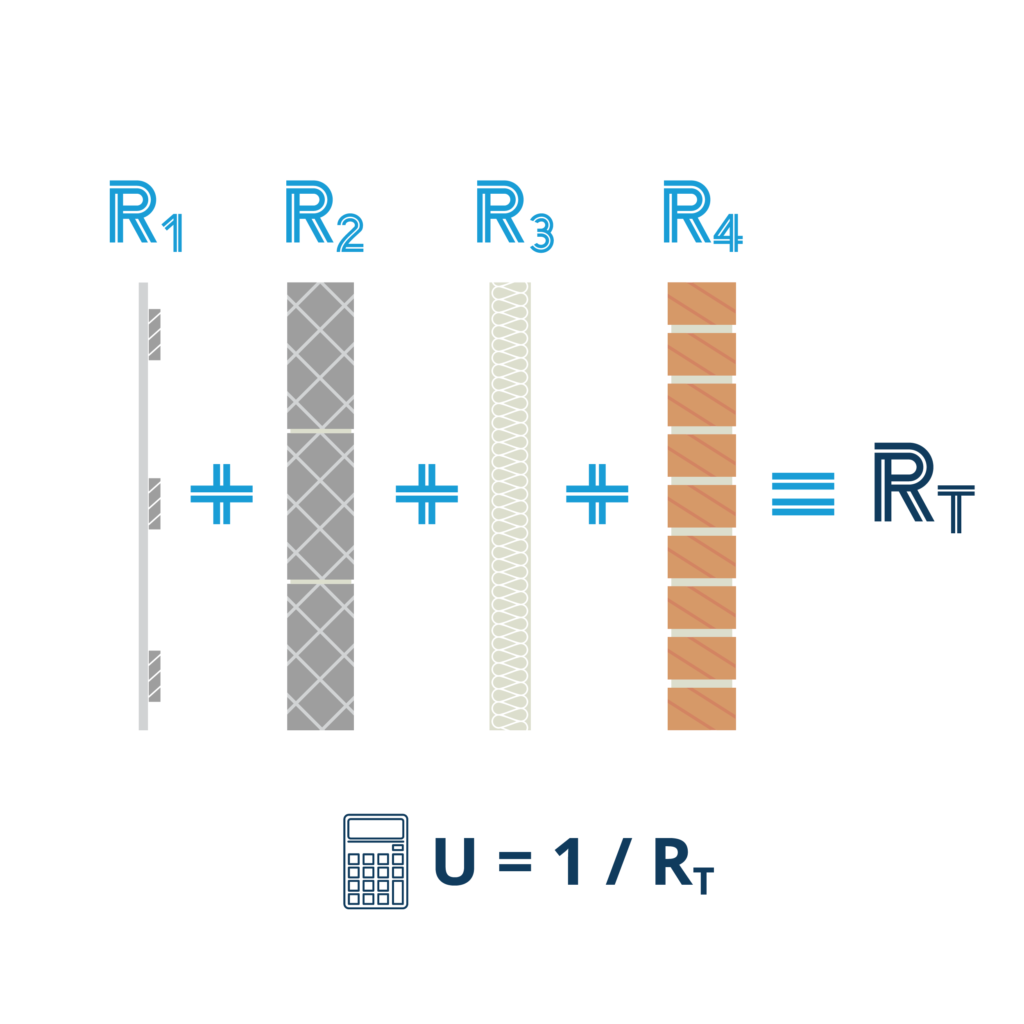
In Detail U value –
if you were How to Calculate R-Value & U-Value In Details so please read in Article The U value indicates how much heat escapes through a wall, floor, or ceiling. It’s also called the “overall heat transfer coefficient” and indicates how effectively heat moves through a building. This suggests that the building envelope’s thermal performance declines as the U value rises. A lower U value often indicates higher levels of insulation. They are useful because they make it possible to forecast a building element’s overall behavior rather of only depending on the traits of its individual components.

- R is the R-value (hr-ft²·°F/Btu)
- U is the U-value (Btu/hr-ft²·°F)
- C is the conductance (Btu/hr-ft²·°F)
- K is the conductivity (Btu·in/hr-ft²·°F)
- ΣR is the sum of the individual R-values
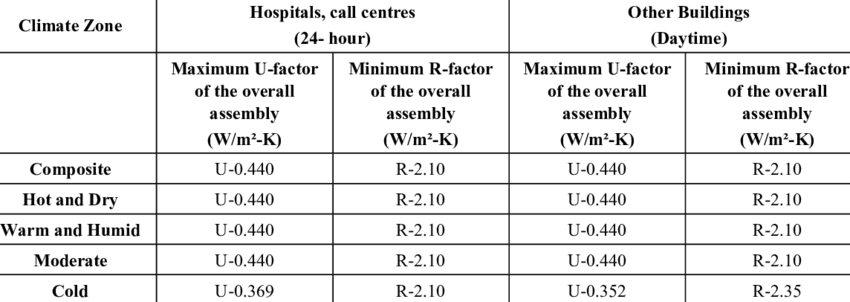
In Detail R value
The measurement of a material’s thermal resistance to heat transmission is known as its R-value in HVAC. It gauges how well a substance can stop heat from passing through it. Better insulation capabilities, such as the ability to block heat transfer and retain heat in the winter or keep out cold air in the summer, are indicated by a higher R-value.
This number affects how well the insulation material manages indoor temperatures and reduces the need for excessive heating or cooling, making it important when choosing insulation materials for buildings or HVAC systems. R-value quantifies heat absorption or loss through walls, roofs, floors, and other structural components, helping to evaluate the efficacy of various insulating materials and creating energy-efficient environments.

- R = R-value
- Thickness of the material is measured in inches or meters.
- Thermal conductivity is the ability of a material to conduct heat, measured in terms of its thermal conductivity constant (often denoted by K)
- For instance, if you have a material with a thickness of 2 inches and a thermal conductivity of 0.5 W/mK (watts per meter Kelvin), the R-value would be:

This means the material has an R-value of 4 square meters Kelvin per watt, indicating its thermal resistance.
Have Specific Equipment or Plant Capacities to Calculate?
Our AI Specialist can troubleshoot technical issues, calculate duct velocity, determine chiller load, or size cables specifically for "Understanding the Fundamentals: R-Value & U-Value Explained".

Shahrukh Shaikh
Licensed Engineering ContributorChartered Senior MEP Engineer & Review Board Specialist with extensive design, testing, and commissioning field experience across commercial and industrial infrastructure.

Leave a Reply